2026-08-25 · Javier Soto
Common Causes of Uneven Cooling in Lemon Grove Homes
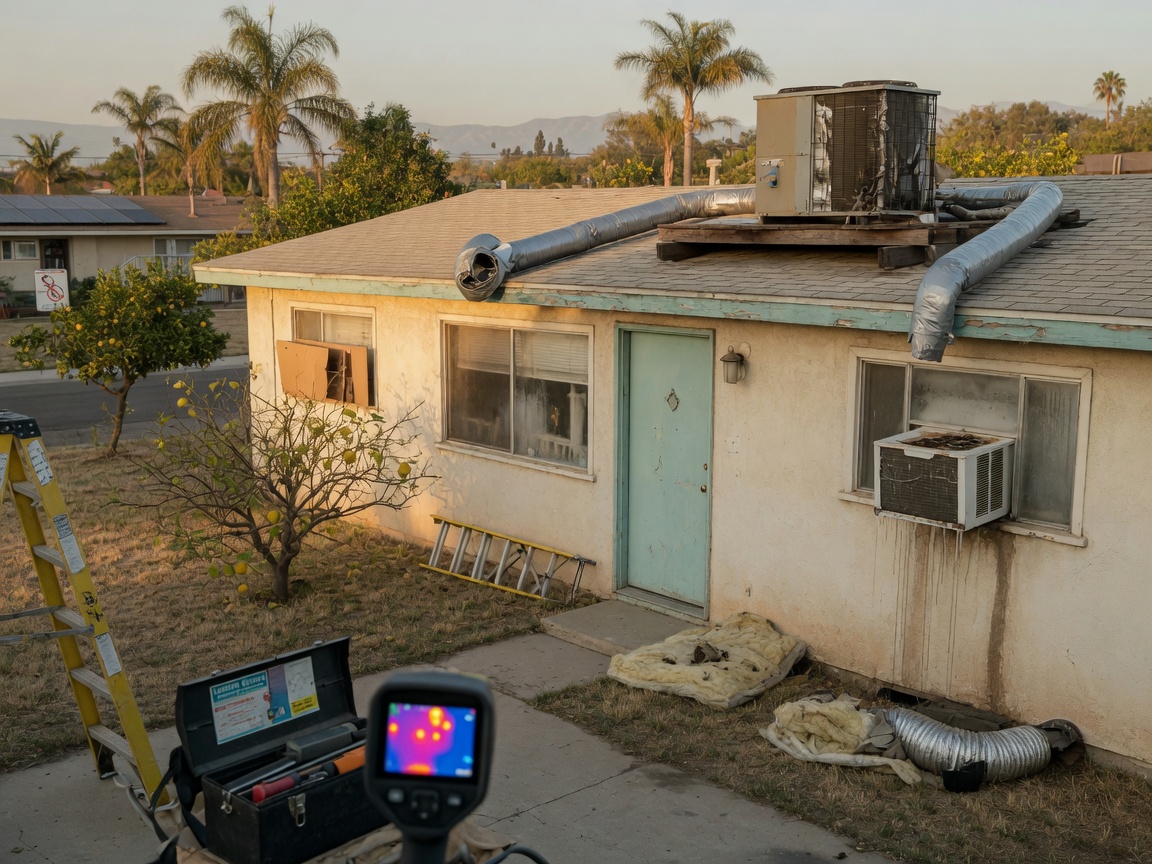
Uneven cooling in Lemon Grove homes most often stems from duct leaks, poor thermostat placement, clogged filters, insulation gaps, and system sizing mismatches common in San Diego County housing built before 1980. These factors interact with the area's warm-summer Mediterranean climate where summer highs push systems hard, especially in single-story ranches around Downtown Lemon Grove and hillside properties in Lemon Grove Heights.
Ductwork Problems in Older Homes
Many Lemon Grove residences from the 1950s and 1960s feature duct runs through attics or crawl spaces that develop leaks at joints after 15–20 years. In Downtown Lemon Grove, these ducts often run long distances to reach rear bedrooms, creating pressure drops that starve distant rooms of airflow. Dust and debris from nearby Lemon Grove Park construction or seasonal winds collect at elbows, further restricting supply. Homeowners notice 8–12 degree temperature swings between living areas and bedrooms during peak afternoon heat. Professional ductwork services can seal these leaks with mastic and test static pressure to restore balance without full replacement. Nearby Spring Valley and La Mesa share similar tract-home layouts that amplify the same airflow restrictions.
Thermostat Placement and Calibration Issues
Thermostats mounted on interior walls near windows or in hallways that receive direct afternoon sun often read 4–6 degrees warmer than actual room conditions in Lemon Grove Heights homes. This causes the system to short-cycle before distant spaces reach set point. Older mechanical models common in El Cajon-adjacent neighborhoods drift out of calibration after 8–10 years, widening the gap between upstairs and downstairs zones. Smart replacements with remote sensors correct this by averaging readings across multiple rooms. Proper thermostat services also account for the county's typical 20–30 degree daily temperature swings that make single-point sensing unreliable.
Clogged Air Filters Reducing Airflow
Filters left unchanged for more than 60 days during summer load in Lemon Grove trap enough dust to cut airflow by 20–30 percent, starving supply registers farthest from the air handler. Local pollen and fine soil tracked in from Lemon Grove Depot Museum parking areas accelerate loading on pleated media. Homeowners who follow guidance on how to replace your HVAC air filter correctly every 30–45 days during peak months see more consistent temperatures across all rooms. Restricted airflow also raises static pressure, which can damage blower motors after repeated seasons of Mediterranean heat.
Insulation Gaps and Window Heat Gain
Single-pane windows and minimal attic insulation in pre-1970 Lemon Grove homes allow solar gain that overwhelms supply air in south-facing rooms. The warm-summer Mediterranean pattern delivers intense afternoon sun from May through October, pushing attic temperatures above 120 degrees and radiating heat downward. Adding R-38 insulation and sealing window frames reduces the load difference between shaded and exposed spaces by 5–8 degrees. These upgrades pair well with what affects HVAC energy use during Lemon Grove winters by lowering overall system runtime year-round.
System Sizing and Zoning Shortfalls
Many Lemon Grove installations sized for 1,800–2,200 square foot homes deliver uneven performance when owners add square footage or convert garages without rebalancing dampers. Single-zone systems common in the area cannot compensate for the elevation changes between flat Downtown Lemon Grove lots and sloped Lemon Grove Heights properties. Adding motorized dampers or variable-speed equipment through HVAC repair restores even distribution without replacing the entire unit.