2026-08-25 · Javier Soto
What Affects HVAC Energy Use During Lemon Grove Winters
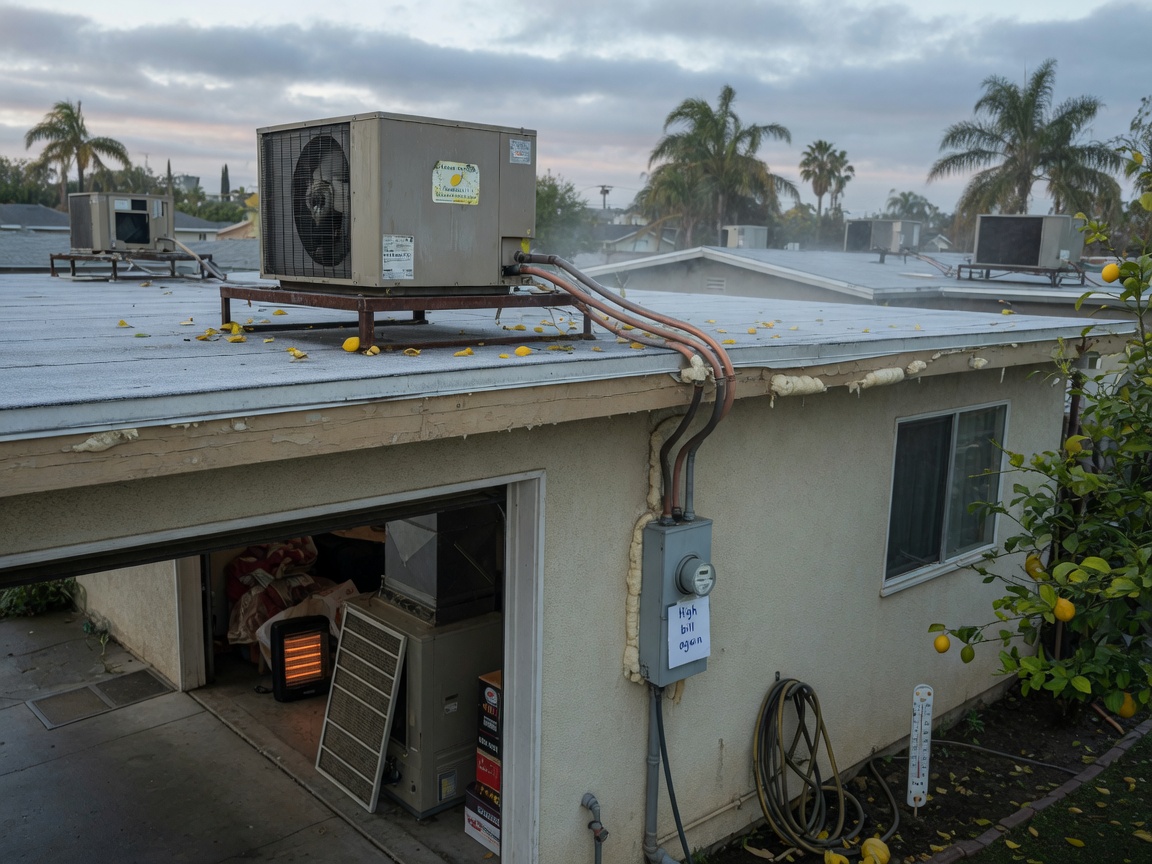
Lemon Grove winters typically increase HVAC energy use by 25–40% compared to shoulder months because even mild Mediterranean temperatures require consistent heating in homes built before 1980. Older single-story houses in Downtown Lemon Grove and Lemon Grove Heights often feature minimal wall insulation and original duct runs that leak 15–30% of conditioned air into unconditioned attics.
Home Construction and Insulation Levels
Most residences in Lemon Grove date from the 1950s through 1970s, with single-pane windows and R-11 or lower attic insulation common in Downtown Lemon Grove. These details force HVAC systems to run longer cycles once overnight lows drop into the mid-40s. Homes near Lemon Grove Park experience slightly more wind exposure, which accelerates heat loss through roofs and walls. Upgrading attic insulation to R-38 can cut winter energy use by 10–18% in these structures, while sealing duct joints in crawlspaces or garages prevents further waste.
Local Climate Patterns and Heating Loads
Lemon Grove’s warm-summer Mediterranean climate brings daytime highs around 65°F but nighttime lows in the 45–52°F range from December through February. This swing means systems cycle on for 4–7 hours daily in uninsulated homes. Proximity to La Mesa and Spring Valley means similar patterns, yet Lemon Grove’s slightly lower elevation creates marginally higher humidity that makes 68°F feel cooler indoors. Residents near the Lemon Grove Depot Museum often report higher bills when coastal marine layers linger, because moist air transfers heat faster than dry air.
Ductwork Condition and Airflow Restrictions
Leaky or poorly insulated ducts in attics account for the largest single energy loss in Lemon Grove homes. Ductwork Services address gaps at joints and connections that commonly form after 15–20 years. In neighborhoods like Lemon Grove Heights, tree pollen and dust from nearby hills further clog filters and coils, reducing airflow and forcing blowers to work harder. Regular filter changes, detailed in How to Replace Your HVAC Air Filter Correctly, maintain proper static pressure and keep energy use within expected ranges.
Thermostat Habits and System Controls
Programmable thermostats set 3–5°F lower at night cut energy use noticeably during Lemon Grove’s 10–12 week heating season. Many older homes still rely on manual thermostats that stay at 72°F around the clock. Thermostat Services help match settings to actual occupancy patterns in single-story layouts typical of the area. Avoiding constant fan-on mode also prevents unnecessary electricity draw when outdoor temperatures rarely fall below 40°F.
Maintenance Timing and Filter Quality
Scheduling HVAC Maintenance before November prevents dirty coils and low refrigerant from inflating winter energy costs. In El Cajon and nearby Spring Valley, similar soil and pollen loads require the same pre-winter attention. Systems that receive biannual tune-ups typically use 12–20% less energy than neglected units during the first cold snap. Homeowners who track monthly kWh usage notice the difference most clearly in January and February bills.